Showing posts with label poetry and poets. Show all posts

Friday, June 14, 2019

"Before Quiet" by Hazel Hall

Image result for monet water lilies
"Water Lilies" Claude Monet 1906


I will think of water-lilies
Growing in a darkened pool,
And my breath shall move like water,
And my hands be limp and cool.

It shall be as though I waited
In a wooden place alone;
I will learn the peace of lilies
And will take it for my own.

If a twinge of thought, if yearning
Come like wind into this place,
I will bear it like the shadow
Of a leaf across my face.


Tuesday, May 28, 2019

"He Goads Himself" by Louis Untermeyer

Related image


And was it I that hoped to rattle
A broken lance against iron laws?
Was it I that asked to go down in battle
For a lost cause?

Fool! Must there be new deaths to cry for
When only rottenness survives?
Here are enough lost causes to die for
Through twenty lives.

What have we learned? That the familiar
Lusts are the only things that endure;
That for an age grown blinder and sillier,
There is no cure.

And man? Free of one kind of fetter,
He runs to gaudier shackles and brands;
Deserving, for all his groans, no better
Than he demands.

The flat routine of bed and barter,
Birth and burial, holds the lot….
Was it I that dreamed of being a martyr?
How—and for what?

Yet, while this unconcern runs stronger
As life shrugs on without meaning or shape,
Let me know flame and the teeth of hunger;
Storm—not escape.

Monday, May 20, 2019

"Variation on a Theme" by W.S. Merwin

We lost this great spirit and fearless observer of life on March 15.

W. S. Merwin
Photo Credit: Matt Valentine

Thank you my life long afternoon
late in this spring that has no age
my window above the river
for the woman you led me to
when it was time at last the words
coming to me out of mid-air
that carried me through the clear day
and come even now to find me
for old friends and echoes of them
those mistakes only I could make
homesickness that guides the plovers
from somewhere they had loved before
they knew they loved it to somewhere
they had loved before they saw it
thank you good body hand and eye
and the places and moments known
only to me revisiting
once more complete just as they are
and the morning stars I have seen
and the dogs who are guiding me


Thursday, February 21, 2019

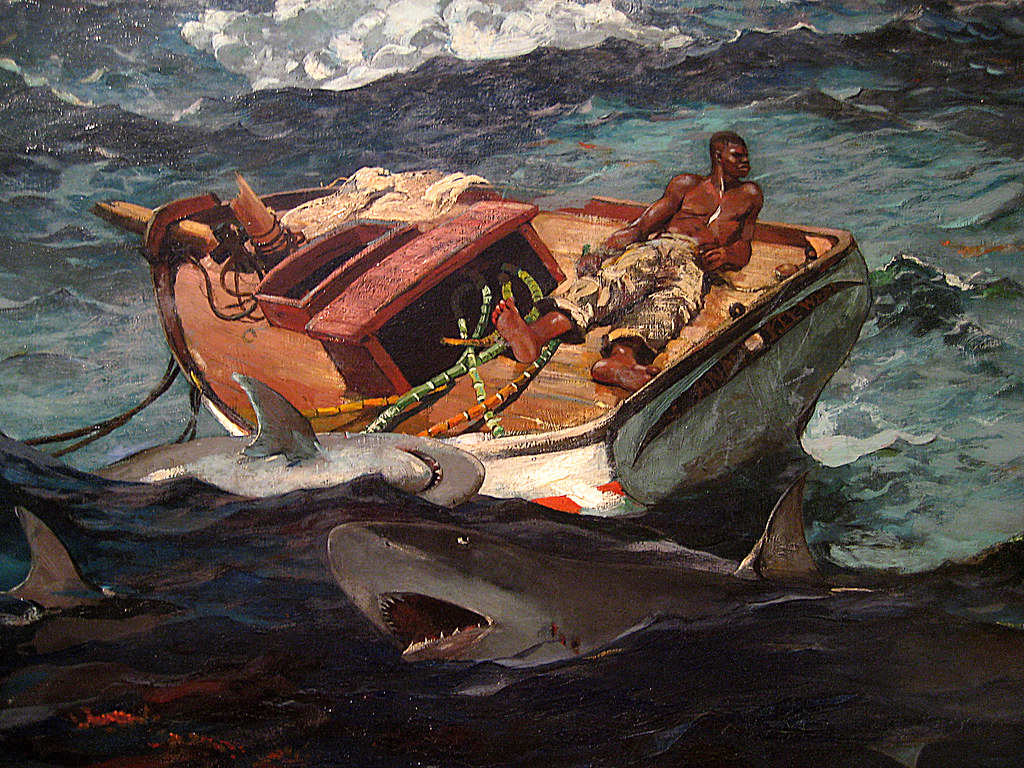
"The Maldive Shark" by Herman Melville

Related image
"The Gulf Stream" -- Winslow Homer -- 1899


About the Shark, phlegmatical one,
Pale sot of the Maldive sea,
The sleek little pilot-fish, azure and slim,
How alert in attendance be.
From his saw-pit of mouth, from his charnel of maw
They have nothing of harm to dread,
But liquidly glide on his ghastly flank
Or before his Gorgonian head:
Or lurk in the port of serrated teeth
In white triple tiers of glittering gates,
And there find a haven when peril’s abroad,
An asylum in jaws of the Fates!
They are friends; and friendly they guide him to prey,
Yet never partake of the treat—
Eyes and brains to the dotard lethargic and dull,
Pale ravener of horrible meat.

Sunday, February 17, 2019

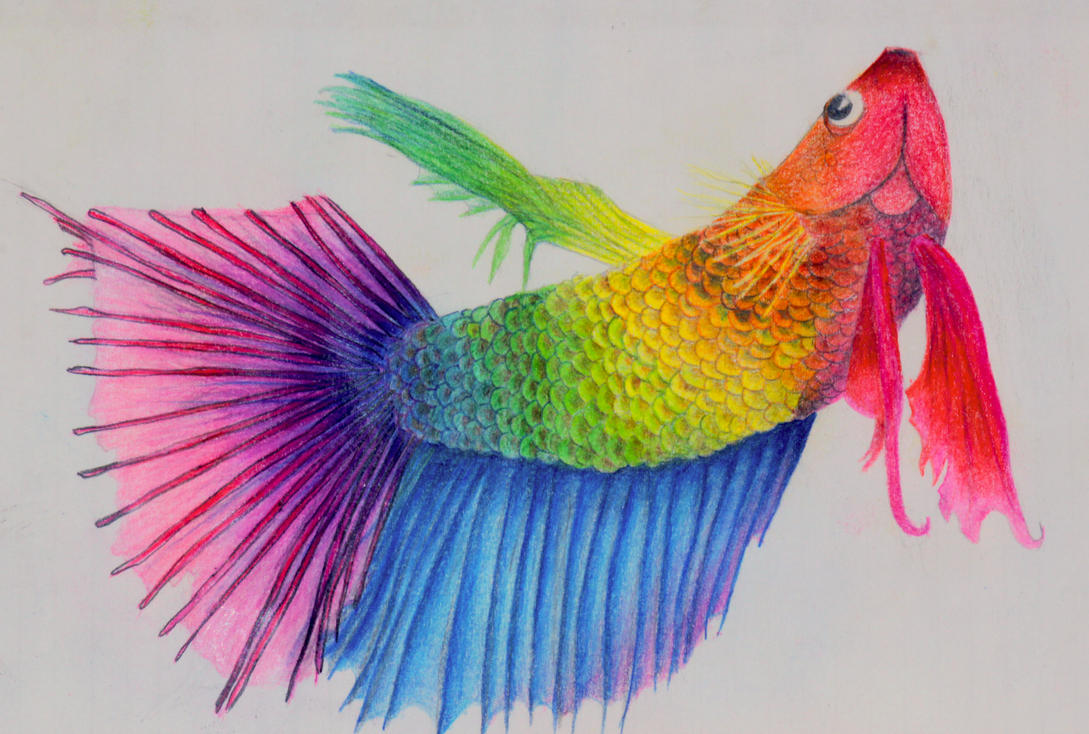
"Fishmonger" by Marsden Hartley

Rainbow Fish by African-Amber
"Rainbow Fish" -- African-Amber


I have taken scales from off
The cheeks of the moon.
I have made fins from bluejays’ wings,
I have made eyes from damsons in the shadow.
I have taken flushes from the peachlips in the sun.
From all these I have made a fish of heaven for you,
Set it swimming on a young October sky.
I sit on the bank of the stream and watch
The grasses in amazement
As they turn to ashy gold.
Are the fishes from the rainbow
Still beautiful to you,
For whom they are made,
For whom I have set them,
Swimming?

Saturday, February 2, 2019

"Fragmentary Blue" by Robert Frost

(A bluebird comes, and then I find a poem to go with it.)


Why make so much of fragmentary blue
In here and there a bird, or butterfly,
Or flower, or wearing-stone, or open eye,
When heaven presents in sheets the solid hue?

Since earth is earth, perhaps, not heaven (as yet)—
Though some savants make earth include the sky;
And blue so far above us comes so high,
It only gives our wish for blue a whet.

Tuesday, January 29, 2019

"Untitled" by Noor Ibn Najam


No matter the rush of undertow
everything else is still
here. I scrawl your name 
at the bottom of the river 
I sing it and it sings me 
back. What I’d give for a name 
so keen     it whittles 
the valleys of my neck. I’m forever drenched 
in this night, and you 
no longer exist. The river catches 
the sky’s black, ink 
meant to preserve a memory. I stay 
because it’s easy. Here. I relive 
what you did to me, find myself again 
in the water—swollen and sullen 
as a bruise. I trace 
and retrace, graffiti 
every river’s bank, drown 
into ecstasy 

instead of moving on with my life.
I wear what you did to me
like gills, a new way to breathe. 
I jump into the river 
for days. I forget I have lungs at all. 

Wednesday, December 12, 2018

"At a Window" by Carl Sandburg

A painting of a scene at night with 10 swirly stars, Venus, and a bright yellow crescent Moon. In the background there are hills, in the middle ground there is a moonlit town with a church that has an elongated steeple, and in the foreground there is the dark green silhouette of a cypress tree and houses.
"The Starry Night" Vincent Van Gogh 1889

Give me hunger,
O you gods that sit and give
The world its orders.
Give me hunger, pain and want,
Shut me out with shame and failure
From your doors of gold and fame,
Give me your shabbiest, weariest hunger!

But leave me a little love,
A voice to speak to me in the day end,
A hand to touch me in the dark room
Breaking the long loneliness.
In the dusk of day-shapes
Blurring the sunset,
One little wandering, western star
Thrust out from the changing shores of shadow.
Let me go to the window,
Watch there the day-shapes of dusk
And wait and know the coming
Of a little love.

Wednesday, November 28, 2018

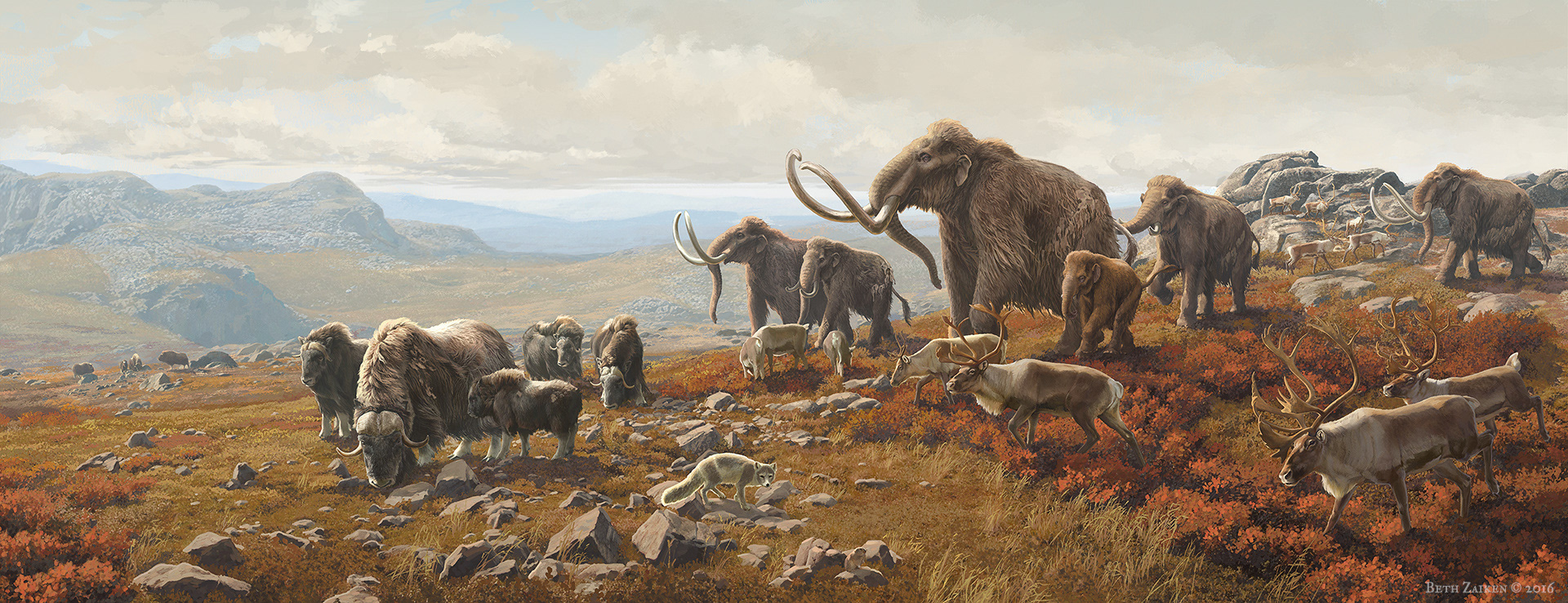
"Song for the Woolly Mammoth" by Lauren Moseley

Related image
Beth Zaiken, New York State Museum

                    When glaciers trapped a third of Earth’s water and drained the Bering
                         Strait, humans
                     journeyed to this land where wind swept the steppes of snow, exposing
                         grass

                    that would be plucked by mammoth trunks and ground by washboard
                         teeth.
                    Up to thirteen feet, their tusks curved helically and would intertwine
                         if they went on

                    a little longer. The beasts’ dense hair—brown, blonde, or ginger—
                         swung like a skirt
                    about their flanks. I want to rest my head against that shaggy coat, to
                         crane

                    my ears, to be protected from the giant short-faced bear. I want to be
                    their baby, wrap my trunk around my mother’s, watch the wild horses of 
                         Beringia

                    canter across the steppes in tawny, fine-boned movements. The thick
                         fat
                    under my hair keeps me warm when the sun goes low, and I grow into

                    an eight-ton bull, pierce the ice with my tusks and drink from glacial
                         pools.
                    The wind is bitter, but my strongest features have grown bigger than
                         my father’s.

                    When summer comes I must find a mate, and it only takes a few tusk
                         locks to show
                    my strength. After our calf is born, I see upright creatures eyeing him
                         from the mesa.

                    I will fling them against the icy mountains. They wear our hair as if it
                         were
                    their skin. Still, I will live through many winters, through each warm
                         season’s

                    hardheaded matches. I know the range that slopes like the hump on
                         my back, sunsets
                    redder than the long-toothed cat’s gorging mouth, how musk oxen
                         form a wall of horns

                    and still fall prey to the blade thrown. I know how many herds have
                         fled, and the curves
                    of carcasses stripped to bone by men, wind, and time. I do not know
                         that I am gone.

Monday, November 26, 2018

"Thanks" by W.S. Merwin


Listen
with the night falling we are saying thank you
we are stopping on the bridges to bow from the railings
we are running out of the glass rooms
with our mouths full of food to look at the sky
and say thank you
we are standing by the water thanking it
standing by the windows looking out
in our directions


back from a series of hospitals back from a mugging
after funerals we are saying thank you
after the news of the dead
whether or not we knew them we are saying thank you


over telephones we are saying thank you
in doorways and in the backs of cars and in elevators
remembering wars and the police at the door
and the beatings on stairs we are saying thank you
in the banks we are saying thank you
in the faces of the officials and the rich
and of all who will never change
we go on saying thank you thank you


with the animals dying around us
our lost feelings we are saying thank you
with the forests falling faster than the minutes
of our lives we are saying thank you
with the words going out like cells of a brain
with the cities growing over us
we are saying thank you faster and faster
with nobody listening we are saying thank you
we are saying thank you and waving
dark though it is

Sunday, November 11, 2018

"On Receiving the First News of the War" by Isaac Rosenberg

Image result for ww1 trenches in winter

Snow is a strange white word;
No ice or frost 
Has asked of bud or bird 
For Winter’s cost.

Yet ice and frost and snow
From earth to sky 
This Summer land doth know;
No man knows why.

In all men’s hearts it is:
Some spirit old 
Hath turned with malign kiss
Our lives to mould.

Red fangs have torn His face,
God’s blood is shed: 
He mourns from His lone place 
His children dead.

O ancient crimson curse!
Corrode, consume; 
Give back this universe
Its pristine bloom.

Rosenberg is considered one of England's foremost "trench poets."
This poem was published posthumously in 1922.
Rosenberg was killed in battle on April 1, 1918.

Wednesday, November 7, 2018

"Shirt" by Carl Sandburg

Related image
"Study for the Bachelor" Andrew Wyeth 1964


I remember once I ran after you and tagged the fluttering
      shirt of you in the wind.
Once many days ago I drank a glassful of something and
      the picture of you shivered and slid on top of the stuff.
And again it was nobody else but you I heard in the
      singing voice of a careless humming woman.
One night when I sat with chums telling stories at a
      bonfire flickering red embers, in a language its own
      talking to a spread of white stars:
                          It was you that slunk laughing
                          in the clumsy staggering shadows.
Broken answers of remembrance let me know you are
      alive with a peering phantom face behind a doorway
      somewhere in the city’s push and fury.
Or under a pack of moss and leaves waiting in silence
      under a twist of oaken arms ready as ever to run
      away again when I tag the fluttering shirt of you.


Tuesday, November 6, 2018

"The Things That Count" by Ella Wheeler Wilcox (1919)

Related image


Now, dear, it isn’t the bold things,
Great deeds of valour and might, 
That count the most in the summing up of life at the end of the day. 
But it is the doing of old things, 
Small acts that are just and right; 
And doing them over and over again, no matter what others say; 
In smiling at fate, when you want to cry, and in keeping at work when 
you want to play—
Dear, those are the things that count. 

And, dear, it isn’t the new ways
Where the wonder-seekers crowd 
That lead us into the land of content, or help us to find our own. 
But it is keeping to true ways, 
Though the music is not so loud, 
And there may be many a shadowed spot where we journey along 
alone;
In flinging a prayer at the face of fear, and in changing into a song a 
groan—
Dear, these are the things that count. 

My dear, it isn’t the loud part
Of creeds that are pleasing to God, 
Not the chant of a prayer, or the hum of a hymn, or a jubilant shout or 
song.
But it is the beautiful proud part 
Of walking with feet faith-shod; 
And in loving, loving, loving through all, no matter how things go 
wrong;
In trusting ever, though dark the day, and in keeping your hope when 
the way seems long—
Dear, these are the things that count.

Saturday, October 27, 2018

"Wakeful Things" by Michael Prior

Image result for dead deer art
"The Stag At Bay" Richard Ansdell (1815 - 1885)


You should never put the new antlers of a deer
to your nose and smell them. They have little
insects that crawl into the nose and devour the brain.
Kenkō, Essays in Idleness

Consider that the insects might be metaphor.
That the antlers’ wet velvet scent
might be Proust’s madeleine dipped into a cup of tea
adorned with centrifugal patterns of azalea
and willow—those fleshing the hill behind this room,
walls wreathed in smoke and iron, musk
of the deer head above the mantle. He was nailed in place
before I was me. Through the floorboards,
a caterpillar, stripped from its chrysalis by red ants,
wakes, as if to a house aflame. Silk
frays like silver horns, like thoughts branching from a brain.
After the MRI, my father’s chosen father squinted
at the wormholes raveling the screen
and said, Be good to one another. Love, how inelegantly
we leave. How insistent we are to return in one form
or another. I wish all of this and none of it
for us: more sun, more tempest, more
fear and fearlessness—more of that which is tempered, carved,
and worn, creased into overlapping planes. The way
I feel the world’s aperture enlarge in each morning’s
patchwork blur of light and colour while I fumble
for my glasses beside the bed—lenses smudged
by both our hands. When they were alive,
those antlers held up the sky. Now what do they hold?

Wednesday, August 29, 2018

"Blur" by H. L. Hix


Turns out lots of lines prove blurry I once thought sharp.
Some blur from further away, some from closer in.
Plant/animal, for instance. On which side, and why,
the sessile polyps, corals and sea anemones?
Same problem saying why my self must be internal.

Where do I see those finches glinting at the feeder?
To experience the is-ness of what is,
I’d need to locate the here-ness of what’s here.
Or be located by it. Or share location with it.
There’s a line I want to blur: between my senses

and my self. And another: between my senses
and the world. That anemone looks more like a lily
than an appaloosa. Looks, and acts. I feel that fizz
of finches sparkle on my tongue, the back of my throat.
I don’t say these words until I hear them. My voice

visits. Is visitation. I would choose the role
of visitor over visited, if I got to choose.
Those finches trill and warble in sequences of phrases.
I can tell there’s pattern, but not what the pattern is.
I can say I hear them (I do hear them) in my sleep,

but I can’t say what that means. Their twitters and chirps
start early, before I wake. I can say they chatter all day
(they do), when I’m hearing them and when I’m not,
but I can’t say how I know that. The back of my hand
always feels as if it’s just been lightly touched.

Monday, August 20, 2018

"Epistemology" by Catherine Barnett


Mostly I’d like to feel a little less, know a little more.
Knots are on the top of my list of what I want to know.
Who was it who taught me to burn the end of the cord
to keep it from fraying?
Not the man who called my life a debacle,
a word whose sound I love.
In a debacle things are unleashed.
Roots of words are like knots I think when I read the dictionary.
I read other books, sure. Recently I learned how trees communicate,
the way they send sugar through their roots to the trees that are ailing.
They don’t use words, but they can be said to love.
They might lean in one direction to leave a little extra light for another tree.

And I admire the way they grow right through fences, nothing
stops them, it’s called inosculation: to unite by openings, to connect
or join so as to become or make continuous, from osculare,
to provide with a mouth, from osculum, little mouth.
Sometimes when I’m alone I go outside with my big little mouth
and speak to the trees as if I were a birch among birches.

Wednesday, August 15, 2018

"Burn" by Janice N. Harrington

"Prairie Meadows Burning" George Catlin 1832


The wind then, through seams of bluestem,
or switchgrass swayed by a coyote’s passing. 

Where the fabric gapes, Barthes said,
lies the sensual. A prairie cut 

by winding seeps, or winds or shearing wings.
Mare’s tails, mackerels, cirrus, 

distance dispersed as light. Under a buzzard’s bank
and spiral the prairie folds and unfolds. 

Here between the stands of bluestem, I am interruption.
I rake my fingers over culms and panicles. 

Here seeds burr into my sleeves, spur each hem.
In a prairie, I am chance. I am rupture. The wind— 

thief, ruffian, quick-fingered sky, snatches a kink
of my hair. The broken nap falls, wound round 

like a prairie snake, a coil of barbed wire, a snare
for the unwary. In the fall, volunteer naturalists 

will wrench invading roots and scour grassy densities
with fire. Wick, knot, gnarl, my kindled hair 

will flare, burn, soften into ash, ash that will settle,
sieve through soil, compost for roots to suck 

and worms to cast out, out into the loess that raises
redtop, turkeyfoot, sideoats grama, 

and all the darkened progenies of grass
that reach and strive and shape dissent from light. 

Saturday, June 2, 2018

"The Wings of Daylight" by W. S. Merwin

Alexey Terenin

Brightness appears showing us everything
it reveals the splendors it calls everything
but shows it to each of us alone
and only once and only to look at
not to touch or hold in our shadows
what we see is never what we touch
what we take turns out to be something else
what we see that one time departs untouched
while other shadows gather around us
the world’s shadows mingle with our own
we had forgotten them but they know us
they remember us as we always were
they were at home here before the first came
everything will leave us except the shadows
but the shadows carry the whole story
at first daybreak they open their long wings

Monday, May 14, 2018

"Thirsting" by Alicia Ostriker


It’s not that the old are wise
But that we thirst for the wisdom 

we had at twenty
when we understood everything 

when our brains bubbled
with tingling insights 

percolating up from
our brilliant genitals 

when our music rang like a global siege
shooting down all the lies in the world 

oh then we knew the truth
then we sparkled like mica in granite 

and now we stand on the shore
of an ocean that rises and rises 

but is too salt to drink

Tuesday, April 17, 2018

"What Have I Learned" by Gary Snyder

File:Calochortus luteus - Flickr 009.jpg
Calochortus, mariposa lily


What have I learned but
the proper use for several tools?

The moments
between hard pleasant tasks

To sit silent, drink wine,
and think my own kind
of dry crusty thoughts.

—the first Calochortus flowers
and in all the land,
it’s spring.
I point them out:
the yellow petals, the golden hairs,
to Gen.

Seeing in silence:
never the same twice,
but when you get it right,

you pass it on.

"What Have I Learned" by Gary Snyder from No Nature. © Pantheon Books, 1992.